

The hardest service problems rarely start in service.
A difficult diagnosis may begin with a design decision, a missing fault code, unclear service information or a gap in training.
Ridgeline looks at the whole system — the vehicle, the people and the information connecting them — before recommending what to change.
Our perspective
Specialization is essential. Isolation is not.
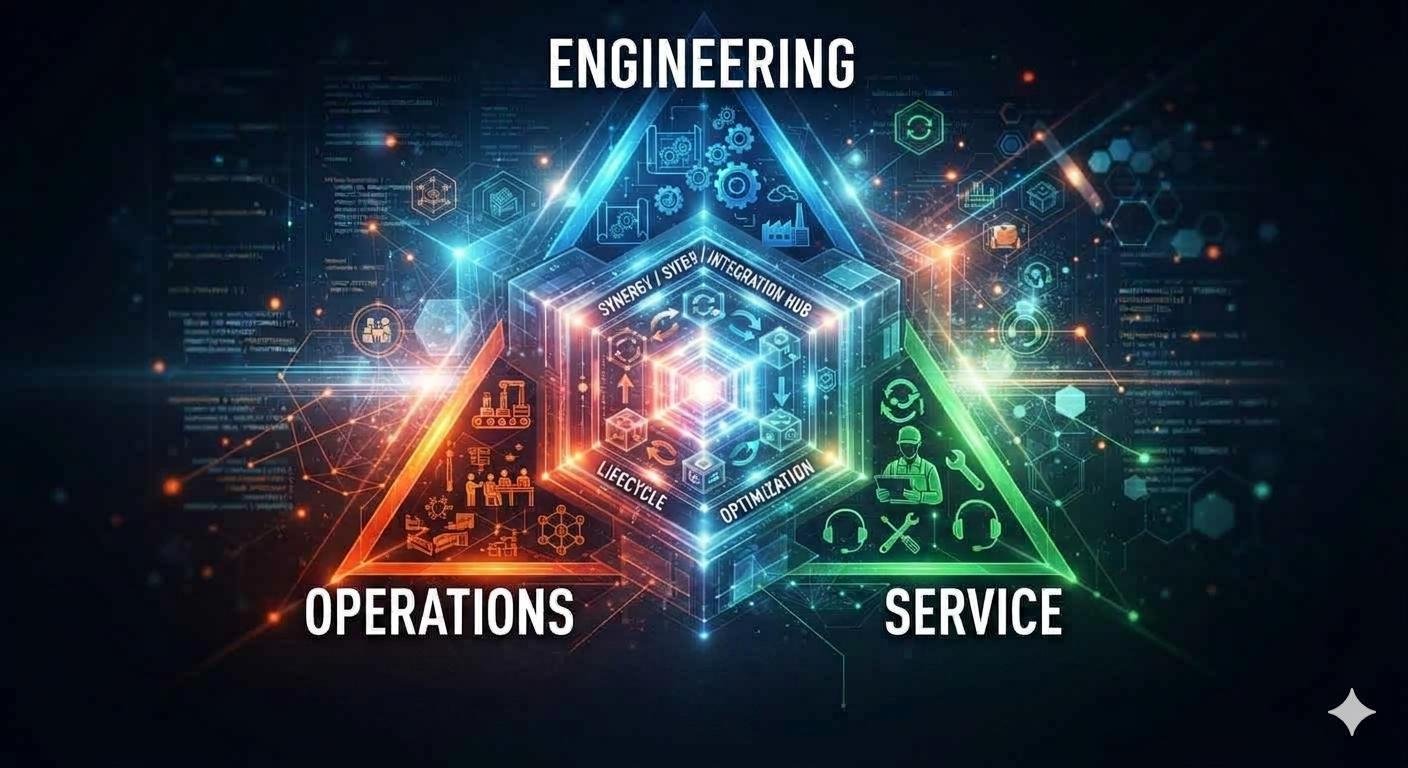
Each part of a technical organization holds a different piece of the same reality:
Engineering understands design intent.
Operations understands performance at scale.
Service understands how systems degrade, fail, and are restored.
When those perspectives remain disconnected, problems persist.
Ridgeline helps specialized teams understand how their decisions affect one another, identify problems at their source, and build more effective ways of working together.
What we strengthen
Four capabilities that keep technical organizations learning.
Closed-Loop Intelligence
What the field learns gets back to the people who can fix it upstream — so the organization stops relearning the same lessons.
Cross-Functional Fluency Engineers, operators and technicians understand enough of each other's language and constraints to solve problems together.
Organizational Adaptability Capable people have the information, tools and authority to act when conditions change, within clear guardrails.
Continuous Evolution Improvement becomes part of normal work, not a one-time initiative — products, diagnostics, information and skills keep advancing together.
How we evaluate
Six boundaries of evaluation.
Every change has consequences beyond its goal. We test recommendations against six boundaries so an improvement in one area doesn't quietly create a problem in another.
Safety —
Protect people first.
Adaptability —
Stay capable as conditions change.
Quality —
Reliable, consistent performance.
Operability —
Work well in real-world use.
Efficiency —
Remove unnecessary time, cost and effort.
Serviceability —
Designed to be diagnosed, maintained and restored.
How we work
Understand the problem. Address the cause. Build lasting capability.
Observe & Understand
Examine how work actually happens—in the shop, through diagnostic tools and data, and across organizational boundaries.
Analyze & Recommend
Connect technical findings with operational realities to identify underlying causes and practical improvements.
Implement & Transfer
Support the development and adoption of improvements while strengthening the knowledge, processes, and capabilities needed to sustain them.
Our goal is not to create dependence on outside expertise, but to help organizations become more capable themselves.
On AI and intelligent systems
AI can make diagnostics faster and smarter — but only if technicians can understand it, trust it and act on it, and if field results flow back to improve it. Ridgeline focuses on that surrounding system: requirements, field logic, workflows, interfaces and feedback. Where model development or software work is needed, we work alongside your engineering and technology specialists.
About the Founder - Mark Kneisel

North Cascades National Park
Washington
Experience across the service bay, classroom, and engineering organization.
Ridgeline was founded by Mark Kneisel, bringing more than 35 years of experience across automotive diagnostics, technical training, service operations, and engineering collaboration.
His experience includes advanced vehicle diagnostics, EV service readiness and facility planning, technical curriculum development, and diagnostic content leadership within autonomous vehicle development.
He has worked directly with technicians, engineering teams, technical writers, and operational leaders to connect system design with real-world service requirements.
That combination of hands-on experience and systems-level perspective shapes Ridgeline's approach to complex technical challenges.
About the Name?
The name reflects a lifelong passion for climbing and the mountains.
From a ridgeline, terrain that appears disconnected from below becomes one landscape. Relationships, risks, and paths forward become easier to see.
Ridgeline brings that perspective to complex technical organizations—connecting the details to the larger system.